
Quick answer
Psychological safety is the shared belief that it is safe to speak up with ideas, questions, concerns and mistakes. It is often confused with being nice, comfortable or conflict-free. Amy Edmondson's research shows the opposite: it enables candour, disagreement and high standards, not a soft or lenient team culture.
Key takeaways
- Psychological safety is a group climate, not a personality trait or an individual feeling.
- It sits alongside high standards. In Edmondson's learning-zone model, high safety plus high accountability is where teams perform best.
- It makes candour and disagreement easier, so 'nice' and 'safe' are close to opposites.
- It does not mean consensus, comfort or a flat hierarchy — people still make decisions and hold each other to account.
- Because it lives in everyday behaviour, it is built through practice rather than announced in a policy.
Few ideas in leadership have travelled as far, or been bent as far out of shape, as psychological safety. The term has become shorthand for a warm, agreeable, low-conflict team where nobody gets upset. That reading is not what the research describes, and leaders who act on it tend to get the opposite of what they wanted: politeness on the surface, silence underneath.
The concept comes from Amy Edmondson, professor at Harvard Business School, who defines psychological safety as the shared belief that a team is safe for interpersonal risk-taking — safe to ask a question, admit a mistake, raise a concern or float a half-formed idea without fear of being punished or humiliated. Google's Project Aristotle later found it to be the single strongest predictor of team effectiveness across the teams it studied. With that much attention, distortion was almost inevitable. Here are the five myths worth clearing up.
Myth one: psychological safety means being nice
Free field report
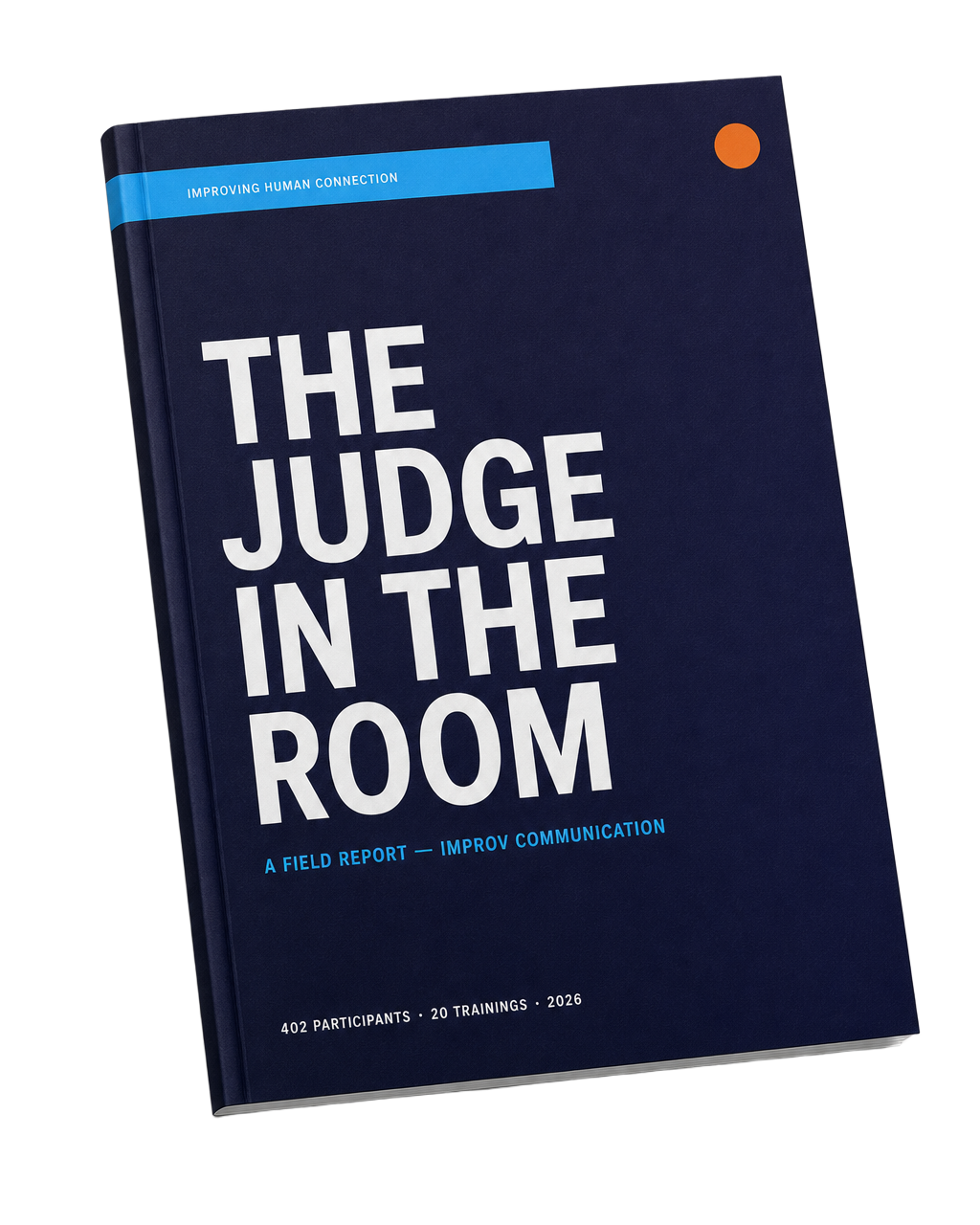
The Judge in the Room — what 402 people told us about psychological safety.
This is the misconception that causes the most damage, because it sounds so reasonable. If people feel safe, surely they are being kind to each other?
Edmondson draws a sharp line between the two. Niceness, in her description, is when people say to each other's faces what they think the other wants to hear, while the honest version comes out later in the corridor. That is tiptoeing, and it is a symptom of low safety, not high. A psychologically safe team can say the difficult thing directly — "I think this plan has a flaw" — and trust that the relationship will hold. So candour and niceness pull in different directions. Safety is what makes candour survivable.
Teams that confuse the two end up agreeable and quiet, which feels pleasant and hides exactly the concerns a leader most needs to hear. You can spot several of these patterns in our guide to the seven signs your team lacks psychological safety.
Myth two: psychological safety lowers standards
The second myth is the one that makes senior leaders wary. If we make it safe to fail, won't people coast?
Edmondson answers this directly with her learning-zone model, a simple two-by-two that crosses psychological safety with accountability. Where safety is low and standards are high, you get an anxiety zone — people are held to account and afraid to speak, so problems stay hidden until they are expensive. Where safety is high and standards are low, you get a comfort zone: a pleasant place where little gets done. Where both are low sits apathy. The learning zone, where teams take intelligent risks and deliver, appears only where high safety meets high accountability.
So the two are not in tension. Safety is what lets a team hold high standards honestly, because people can admit a shortfall early enough to fix it. We unpack this fully in does psychological safety lower accountability?.
Myth three: psychological safety means everyone agrees
A third reading treats safety as consensus — a flat team where every decision is shared and no one is ever overruled. That is a misunderstanding of what the safety is for.
The point of psychological safety is to surface more views, including dissenting ones, so that decisions are better informed. Disagreement is a sign it is working. It does not dissolve hierarchy or hand everyone equal authority; leaders still decide, and being able to say "I hear you, and we are going a different way" is part of a healthy team. A group that mistakes safety for permanent agreement stops challenging itself, which is how confident teams walk into avoidable mistakes.
Myth four: psychological safety is comfort
Comfort and safety feel similar, and they are not the same thing. Learning is frequently uncomfortable. Admitting you were wrong, asking the question that reveals what you do not know, giving a colleague feedback they will not enjoy — none of that is comfortable, and all of it depends on safety.
Edmondson's framing is that safety removes the interpersonal fear around these moments, not the difficulty of the work itself. A team can be stretched, challenged and under real pressure while still being psychologically safe. Conflating the two leads to the comfort zone from myth two, where nobody is asked to do anything hard. The amygdala's threat response is the thing safety quiets — the sense that speaking up will cost you socially — which is a different matter from making the job easy.
Myth five: psychological safety is a personality trait
The final myth is that some people simply have psychological safety and others do not, or that it is a fixed feature of a company's culture. Both miss where it actually lives.
Psychological safety is a property of a group, and it is local. The same person can feel safe to speak in one team and completely silenced in the next, depending on how the people around them respond to questions, ideas and mistakes. That is also the hopeful part: because it is made of everyday behaviour — how a leader reacts to bad news, whether a half-formed idea gets built on or batted down — it can be changed. It is shaped in the room, meeting by meeting, in the small moments most people barely notice. Our guide to how leaders accidentally destroy psychological safety looks at those moments up close.
Why the myths persist
Each of these myths shares a root: they treat psychological safety as a feeling to be managed rather than a set of behaviours to be practised. That is understandable, and it is also why so many good intentions stall. A leader announces that it is now safe to speak up, and the team waits to see what happens the first time someone actually does.
This is the point at which understanding the concept and living it part company. You can explain the learning-zone model on a slide in five minutes; changing how a team responds under pressure takes practice. In our psychological safety trainings, we work with the behaviours themselves — how people give and receive candid input, respond to the unfinished idea, and stay open when the temperature rises — so a team experiences the difference in the room rather than only agreeing with it in principle. That is where the myths finally fall away, because the team has something real to compare them against.
For the full grounding, start with our pillar guide, what is psychological safety?
Free field report
The Judge in the Room
What 402 people told us about psychological safety — and what you can do with it on a Monday morning. Five findings, seven practices, participants’ own words.
Curious?
Is your team losing ideas to silence?
That's exactly what we help leaders see and shift. No pitch — just a proper conversation about your team.