
Quick answer
Most leaders erode psychological safety without meaning to. It happens in small moments — reacting badly to bad news, correcting a half-formed idea, interrupting, checking a phone while someone hesitates, claiming credit, or asking for input then ignoring it. None of it feels significant to the leader. To the person who took the risk, each one is the data that decides whether they speak up next time. The fix is noticing your own reactions in the charged half-second before you respond.
Key takeaways
- Psychological safety is rarely destroyed on purpose — it erodes through small, everyday reactions.
- People calibrate their honesty to what a leader does in the moment, not what the leader says about openness.
- The most damaging behaviours are punishing the messenger, correcting half-formed ideas, and asking for input you've already decided against.
- Leaders can't feel the chill they create, because of the power gap — which is why catching your own reactions is the whole skill.
Nobody sets out to do it
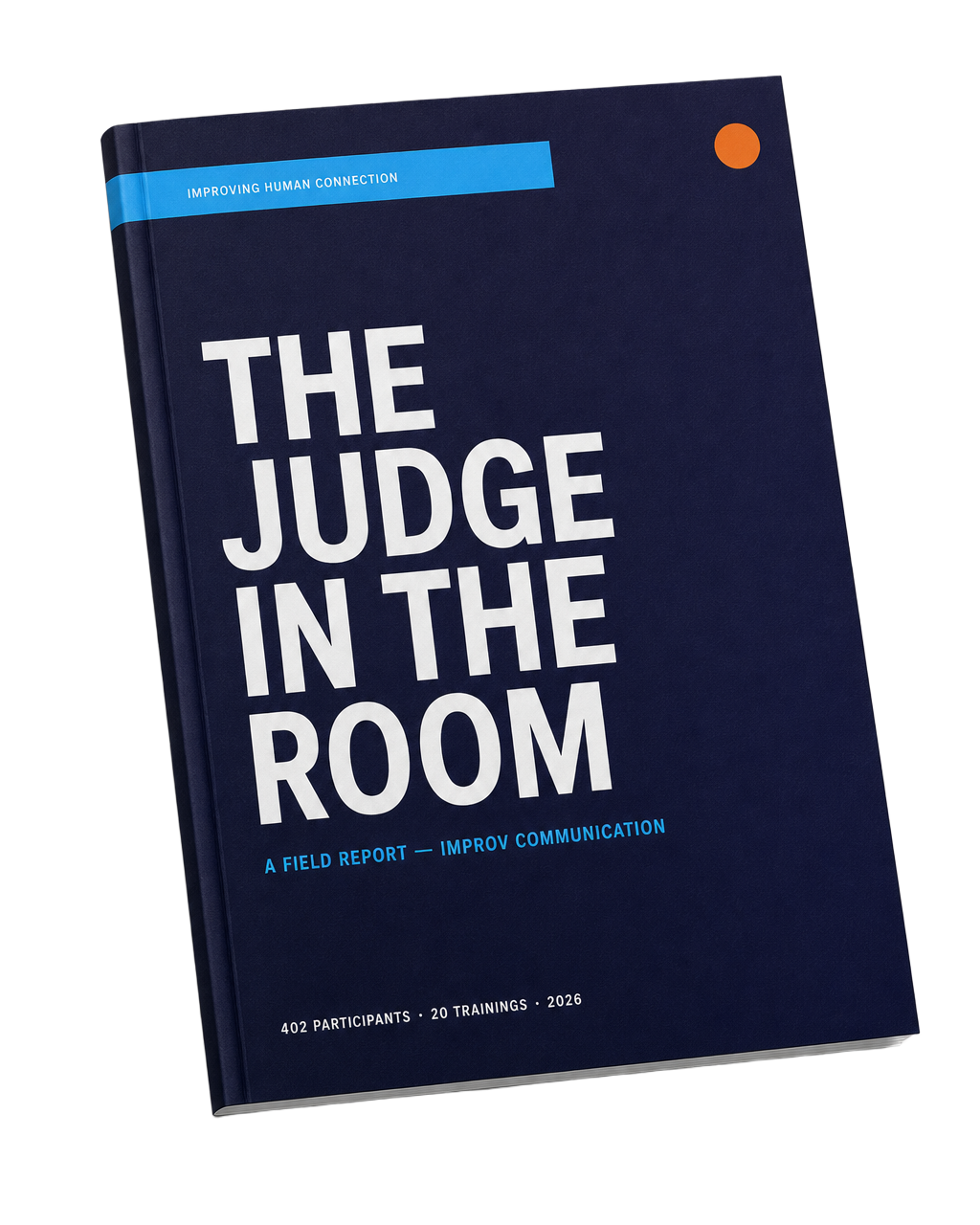
Free field report
The Judge in the Room — what 402 people told us about psychological safety.
Few leaders wake up intending to silence their team. They believe in openness, they say the door is always open, and they mean it. And the team still holds back — because psychological safety isn't destroyed by a grand act. It erodes in small moments, most of which the leader never notices.
People read the most powerful person in the room constantly for cues about what's safe. Every reaction is information. A leader who has announced that all ideas are welcome, and then sighs at an inconvenient one, has just told the room the truth, and the room believes the sigh over the speech.
The behaviours that quietly do the damage
These are the common ones, and most leaders recognise at least a couple in themselves.
Reacting badly to bad news. The flicker of irritation, the defensiveness, the search for who's to blame. Punish the messenger once and you've taught everyone to bring you only good news — which means you stop hearing about problems while they're still small.
Correcting the half-formed idea. Someone offers a rough thought and you immediately improve it, poke a hole in it, or explain why it won't work. It feels like helping. It teaches people to bring you only finished, defensible ideas — which are the safe ones, not the bold ones.
Interrupting, finishing sentences, glancing at the phone. When someone tentative starts to speak and your attention visibly drifts, they learn their contribution isn't worth your focus. The quiet ones simply stop trying.
"We've already been through this." Dismissing a question or a concern as settled, even gently, tells people that raising things is unwelcome. Often the person asking has a reason you haven't heard yet.
Claiming or redirecting the credit. When a good idea gets absorbed upward and the person who had it goes unnamed, everyone notices. The next idea stays in their head.
Asking for input you've already decided against. Inviting opinions on a decision that's already made is worse than not asking, because people feel the pretence and learn that their input is decorative.
Punishing honest mistakes. When a reasonable, well-intentioned mistake is met with blame rather than learning, people start hiding errors instead of surfacing them. The mistakes don't stop. They just go underground, where they grow.
Letting only the confident voices fill the room. When the same three people speak every meeting and no one makes space for the rest, the team's quietest members — often the ones closest to the problem — go unheard.
Why it's invisible to the leader
The reason these behaviours persist is that the leader can't feel the chill they create. Power runs one way. The leader experiences a normal, even healthy exchange; the person on the other end experiences a risk that didn't pay off. What reads as "just being direct" or "thinking out loud" from the top of the table can land as a warning shot from the other end. The gap in how the same moment is felt is exactly why leaders erode safety without knowing it.
How to catch yourself
The skill is noticing your own reaction in the half-second before it shows. When you feel the flash of defensiveness or the urge to correct, that's the moment that matters — pause, stay curious for three seconds longer than is comfortable, and respond as the leader you want to be rather than the one the pressure is pushing you toward. Two habits help: thank people for raising things before you respond to the content, and play back what you heard before you judge it. Both buy you the gap in which a better reaction becomes possible.
How to repair it
Damaged safety is rebuilt the way it was lost — through accumulated small moments, in the other direction. Name that you want more candour, then prove it by responding well the next several times someone takes a risk, especially when it's inconvenient. One good response won't undo a pattern. A run of them will. And because the behaviours are hard to change by intention alone — they fire automatically, under pressure — they're best practised. We put leaders through situations where they feel the difference their reactions make and rehearse the better response until it holds when the stakes are real. The goal is simple: become the kind of leader people tell the truth to.
Free field report
The Judge in the Room
What 402 people told us about psychological safety — and what you can do with it on a Monday morning. Five findings, seven practices, participants’ own words.
FAQ
Frequently asked questions
- What behaviours destroy psychological safety?
- The common ones are punishing the messenger, correcting half-formed ideas, interrupting or showing inattention, dismissing questions as settled, claiming others' credit, asking for input you've already decided against, and blaming honest mistakes.
- Why do leaders erode psychological safety without realising?
- Because of the power gap. The leader experiences a normal exchange; the person taking the risk experiences a reaction that didn't pay off. Leaders can't feel the chill they create, so the behaviour goes unnoticed.
- Can psychological safety be rebuilt once it's damaged?
- Yes, slowly and through consistency. Name that you want candour, then respond well the next several times someone takes a risk. A run of good responses rebuilds the pattern.
- How do I know if I'm doing this?
- Watch what happens around you: do people bring you problems early or late, do the quiet ones speak, does bad news reach you in time? A psychological safety measure and honest feedback both help — the behaviours are hard to see from the inside.
Keep reading
Related from IMPROV
Curious?
Is your team losing ideas to silence?
That's exactly what we help leaders see and shift. No pitch — just a proper conversation about your team.