

Quick answer
Listening is the most underrated leadership skill. Most leaders listen to reply — already forming their answer while the other person is still talking. Deep listening means listening to understand: staying present, letting silence do its work, hearing what isn't said, and showing the person they've been understood before you respond. It's the fastest way to build trust, surface honest information and make better decisions, and it's a learnable habit. This playbook covers the practices that build it.
Key takeaways
- Most leaders listen to reply, not to understand — and people can tell, instantly.
- Listening is a leadership act. It's how trust is built and how the truth reaches you.
- Deep listening is a set of behaviours you can practise: presence, silence, playing it back, hearing the unsaid.
- The higher you rise, the less honest information reaches you — strong listening is what reopens the flow.
- Like any behaviour, it's simple to understand and harder to do under pressure.
Most leaders listen to reply
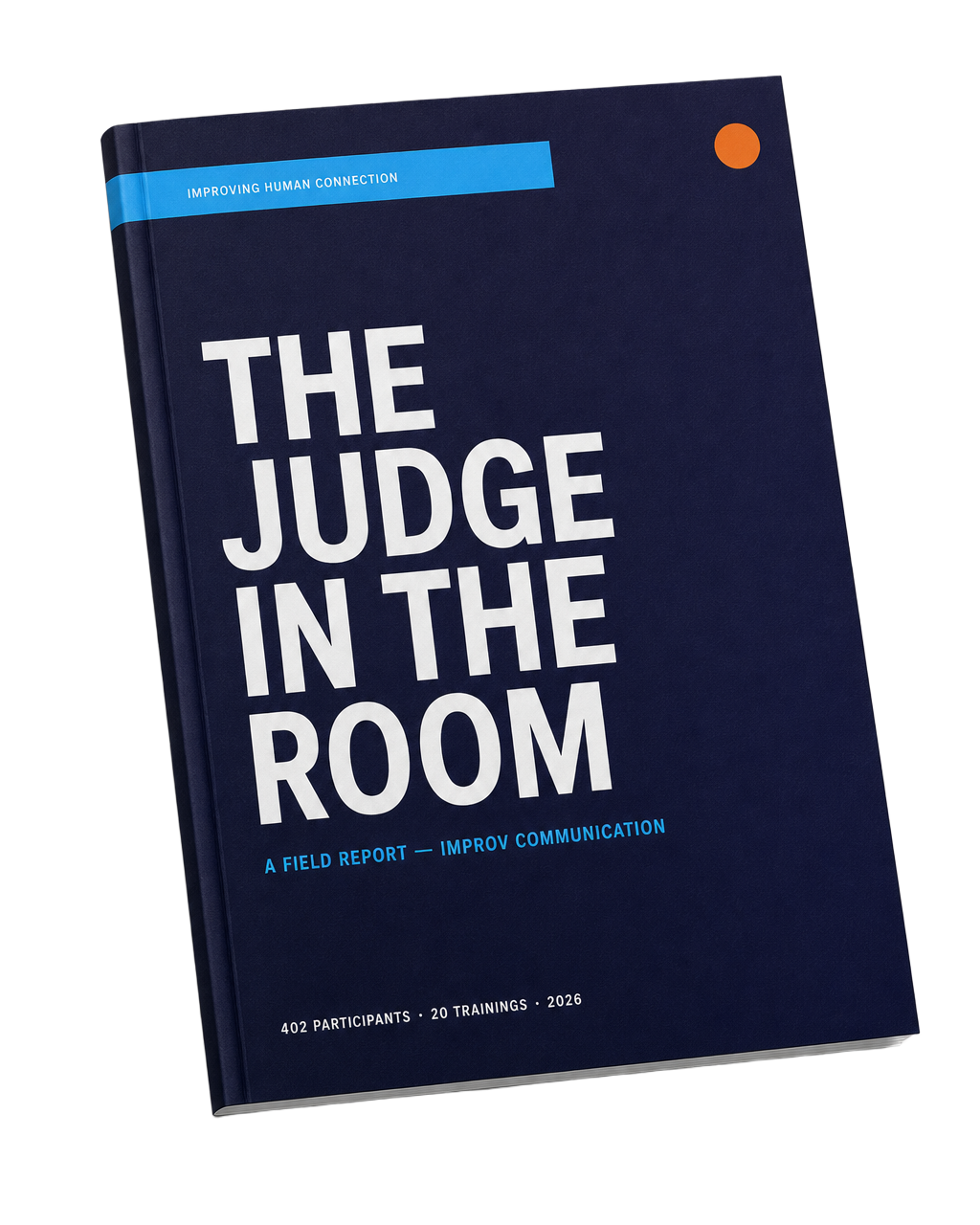
Free field report
The Judge in the Room — what 402 people told us about psychological safety.
Stephen Covey put it best: most people don't listen with the intent to understand, they listen with the intent to reply. Watch a busy leader in a one-to-one and you'll often see it — the slight nod that means "I've got the gist, I'm now preparing my answer", the reply that arrives a half-beat too fast, the subject moved on before the other person had finished their thought.
It's understandable. Senior people are paid to have answers, and answering quickly feels like competence. The cost is quiet and large. When someone senses you're listening to reply, they give you the headline and keep the rest. You make decisions on half the picture, and you never learn what you didn't hear.
Why listening is a leadership act, not a soft skill
There's a model we work from: Input → Inspiration → Proper Response. The quality of a leader's response depends entirely on the quality of the input they take in. Rush the input, and even a clever response answers the wrong question. Listening properly is how you get the input right.
It matters more the higher you go. The further you rise, the more carefully people manage what they tell you — the bad news gets softened, the doubt goes unspoken, the concern waits for a better moment that never comes. Deep listening is one of the few things that reopens that flow. When people feel properly heard, they tell you more, and they tell you sooner. That's no nicety — it's how you find out what's actually happening in time to do something about it.
Daniel Goleman's research on emotional intelligence puts listening and empathy near the centre of effective leadership. In our own EPIC framework, it sits under Empathy and Connection — two of the four capacities that decide whether people choose to follow someone. Listening is where both begin.
The deep listening playbook
These are the moves. Each is simple to describe, and each takes practice to do well under pressure.
1. Listen to understand, not to reply
Set yourself one job in the conversation: understand what this person actually means, before you decide what you think. Notice the moment your attention shifts from them to your own response, and bring it back. The reply can wait ten seconds. It will be better for it.
2. Let the silence work
When someone stops talking, resist filling the gap. A few seconds of silence feels uncomfortable to you and feels like permission to them — it's often the moment they say the real thing, the part they were deciding whether to share. Most leaders talk straight through that opening and never hear what was behind it.
3. Listen for what isn't being said
The words carry some of the message. The hesitation, the thing skipped over, the careful phrasing carry the rest. When someone's tone and words don't match, the tone is usually telling the truth. Notice it, and gently make room for it: "you paused there — what's the part you're not sure about?"
4. Play it back
Before you respond, show you've understood: "so what I'm hearing is…". It does two things at once. It checks you've actually got it, and it tells the person they've landed. People who feel understood relax, open up and trust the conversation. It costs one sentence.
5. Reply with "Yes, and", not "Yes, but"
When you do respond, build on what they've offered rather than blocking it. "Yes, and" keeps the exchange open and signals that their input changed yours. "Yes, but" tells them the listening was a formality. The word you choose teaches them whether it's worth speaking up next time.
6. Manage your own reaction first
When you hear something that lands as criticism or threat, the brain's amygdala pulls you toward defensiveness, and defensiveness ends listening on the spot. The skill is noticing that pull and staying present anyway — staying curious for three more seconds than feels comfortable. That's where the useful conversation usually lives.
The catch
None of this is complicated. It is hard to do consistently, especially when you're busy, under pressure, or hearing something you'd rather not. That gap — between knowing how to listen and doing it when it counts — is exactly the gap experiential training closes. We don't lecture leaders on listening. We put them in conversations where they feel the difference between being half-heard and being understood, and practise the behaviours until they hold when the pressure is on.
Listening looks passive. It's one of the most active, and most powerful, things a leader does.
Free field report
The Judge in the Room
What 402 people told us about psychological safety — and what you can do with it on a Monday morning. Five findings, seven practices, participants’ own words.
FAQ
Frequently asked questions
- What is deep listening in leadership?
- Deep listening means listening to understand rather than to reply — staying present, letting silence work, noticing what isn't said, and showing the other person they've been understood before responding. It's how leaders build trust and get honest information.
- Why is listening important for leaders?
- Because the quality of a decision depends on the quality of the input behind it, and the higher a leader rises, the more carefully people manage what they share. Strong listening reopens that flow, so the truth reaches the leader in time to act on it.
- What is the difference between listening to reply and listening to understand?
- Listening to reply means forming your answer while the other person is still talking, so you catch the headline and miss the rest. Listening to understand means giving full attention to their meaning first, and deciding your response afterwards.
- Can listening actually be improved?
- Yes. Deep listening is a set of behaviours — presence, using silence, playing back what you heard, hearing the unsaid, managing your own reaction. Because the hard part is doing it under pressure, experiential practice tends to build it faster than theory.
- How does listening build trust?
- When people feel properly heard, they relax, share more and tell you sooner. Showing someone you've understood them — before you respond — is one of the quickest ways to build the trust that makes a team honest with its leader.
Keep reading
Related from IMPROV
Curious?
Is your team losing ideas to silence?
That's exactly what we help leaders see and shift. No pitch — just a proper conversation about your team.