
Quick answer
Trust and psychological safety are related and not the same. Trust is your judgement of another person — whether you can rely on them. Psychological safety is a group climate — the shared sense of how the team will respond if you take a risk and speak up. Amy Edmondson frames the difference by direction: trust is whether you give someone else the benefit of the doubt; psychological safety is whether you believe others will give it to you. You can have one without the other, and a strong team needs both.
Key takeaways
- Trust is one-to-one and about another person; psychological safety is a team-level climate about the group.
- Edmondson's distinction is directional: trust looks outward at others, psychological safety is about how you expect others to treat you.
- You can trust a colleague deeply and still feel unsafe in the wider room — and vice versa.
- High-performing teams need both, and they're built in different ways.
Two ideas that get used as if they're one
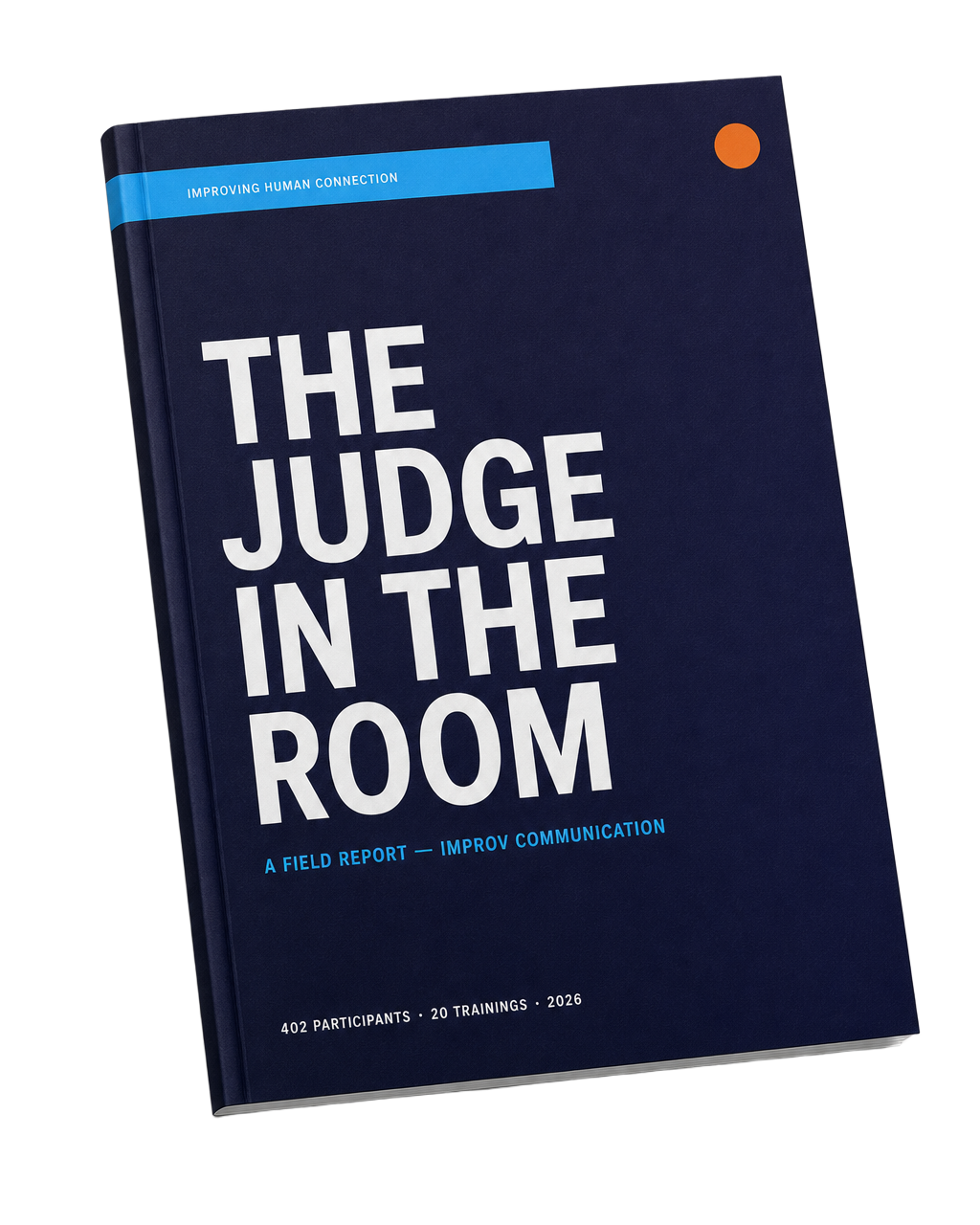
Free field report
The Judge in the Room — what 402 people told us about psychological safety.
Ask a room of leaders what psychological safety is, and a good number will answer "trust". The two travel together, and treating them as the same thing leads people to work on the wrong one. Trust and psychological safety are distinct, and the distinction is practical — it changes what you do to build each.
Trust is about another person
Trust is a judgement you make about someone else: can I rely on you to do what you say, to have my back, to act in good faith? It lives between two people, and it points outward — from you, towards them. You extend trust when you give a colleague the benefit of the doubt. It builds slowly, through a track record of someone proving reliable over time, and it can be specific: you might trust a colleague's competence completely and their discretion not at all.
Psychological safety is about the group
Psychological safety points the other way. It's not your judgement of any one person — it's your read on the climate around you, and specifically what you expect will happen to you if you take an interpersonal risk. Will the room react well if I admit I'm lost, disagree with the boss, or float a half-formed idea? It's a property of the team, a shared sense of the local weather, and it shapes whether people speak up or stay quiet.
Amy Edmondson, who defined the concept, puts the difference in terms of direction. Trust is about whether you give other people the benefit of the doubt. Psychological safety is about whether you believe others will give it to you. Same idea of good faith, opposite direction — and that flip is why they behave so differently in a team.
Why you can have one without the other
The two come apart more often than leaders expect. You can trust a colleague deeply — rely on them entirely — and still hold back in a meeting where the wider climate feels unsafe, because trust in one person doesn't tell you how the group will react. And a team of relative strangers can feel surprisingly safe from the first hour, when the norms and the leader's behaviour make it clear that risk is welcome here, long before deep trust has had time to form.
This is why "we trust each other" is not the same as "it's safe to speak up here". A team can have warm relationships and still bury bad news, if the climate punishes the messenger.
Why leaders need both
Both matter, and they do different jobs. Trust is the bedrock of any working relationship — it lets people rely on each other and move quickly. Psychological safety is what lets the team's real information surface: the doubts, the dissent, the early warnings. A team with trust and no safety is pleasant and quiet about its problems. A team with safety and no trust is candid yet unreliable. The teams that perform have both — they're honest with each other and able to depend on each other.
How each one is built
Because they're different, you build them differently. Trust grows one relationship at a time, through consistency — doing what you said, owning mistakes, showing up. Psychological safety is built at the level of the group, through norms and, above all, leader behaviour: going first with your own fallibility, rewarding the person who raises a hard thing, responding well when someone takes a risk.
The group nature of safety is also why it responds so well to shared experience. A team builds it fastest by going through something together where speaking up is practised and rewarded, until the climate shifts. That's the core of how we work — creating the situations where a team feels what safety is like, and learns to keep it.
Free field report
The Judge in the Room
What 402 people told us about psychological safety — and what you can do with it on a Monday morning. Five findings, seven practices, participants’ own words.
FAQ
Frequently asked questions
- Is psychological safety the same as trust?
- No. Trust is your judgement of whether you can rely on another person; psychological safety is a team-level climate about how the group will respond if you take a risk. Amy Edmondson distinguishes them by direction — trust is giving others the benefit of the doubt, safety is expecting others to give it to you.
- Can you have trust without psychological safety?
- Yes. You can trust a colleague deeply and still feel unsafe speaking up in the wider team, because trust in one person doesn't tell you how the whole group will react.
- Which comes first, trust or psychological safety?
- Either can. A new team can feel safe early when the norms and the leader make risk welcome, before deep trust forms. Trust then deepens over time through reliability.
- Why does the difference matter for leaders?
- Because they're built differently. Working only on relationships (trust) won't fix a climate where people bury bad news (safety), and vice versa. Knowing which you're short on tells you where to act.
Keep reading
Related from IMPROV
Curious?
Is your team losing ideas to silence?
That's exactly what we help leaders see and shift. No pitch — just a proper conversation about your team.