
Quick answer
Google's Project Aristotle studied more than 180 teams over two years to find what makes them effective. The finding: who is on a team matters less than how the team works together. The single strongest predictor of performance was psychological safety — the shared sense that it is safe to speak up, ask questions and admit mistakes.
Key takeaways
- Project Aristotle launched in 2012 and ran for roughly two years, analysing more than 180 Google teams, over 200 interviews and around 250 team attributes.
- Google identified five dynamics of effective teams: psychological safety, dependability, structure and clarity, meaning, and impact.
- Psychological safety was the most important of the five by some distance, and it underpinned the other four.
- The headline finding: how a team works together predicts performance more than who is on it.
- Google's team drew on Amy Edmondson's 1999 research to name the pattern they were seeing in the data.
What was Project Aristotle?
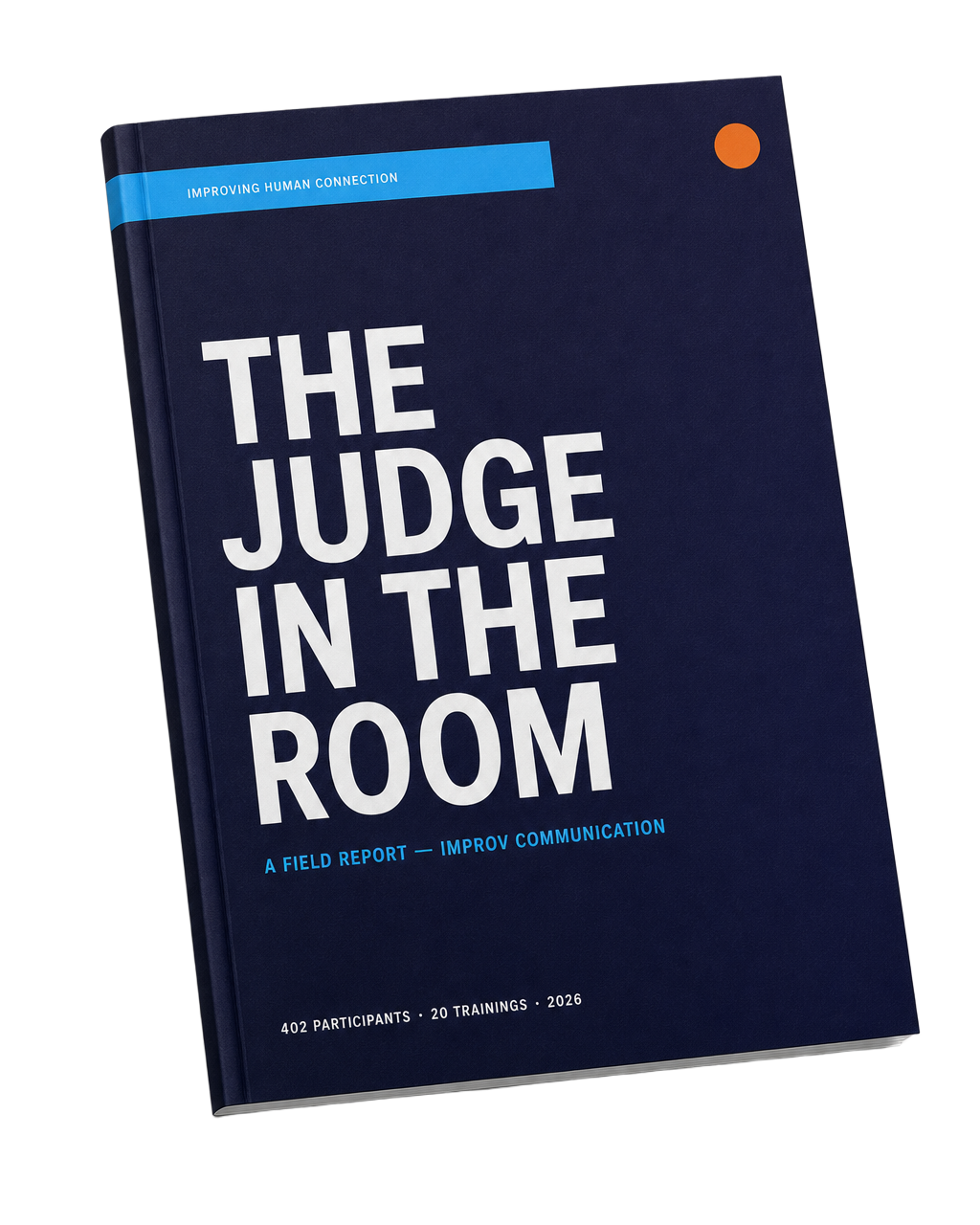
Free field report
The Judge in the Room — what 402 people told us about psychological safety.
In 2012, Google's People Analytics team set out to answer a question every leader asks: why do some teams thrive while others, made up of equally capable people, stall? They called the study Project Aristotle, a nod to the idea that the whole is greater than the sum of its parts.
Over roughly two years, the team studied more than 180 teams across the company. They ran over 200 interviews and looked at some 250 team attributes — who was on each team, how members were educated, how often they socialised, how they were managed. Julia Rozovsky, then on the People Analytics team, helped lead the analysis.
The team expected to find the perfect mix of skills and personalities. What they found instead surprised them.
What did Project Aristotle find?
The composition of a team mattered far less than expected. Google could find no reliable pattern in the blend of skills, backgrounds or personality types on its strongest teams. Star performers grouped together did not guarantee a great team, and a mix of quieter people could outperform them.
What mattered was how the team worked together — the unwritten norms that shape how people treat each other day to day. From that, Google identified five dynamics that set the effective teams apart.
What are the five dynamics of an effective team?
Google named five factors, in order of how much they mattered:
- Psychological safety — the shared sense that it is safe to take an interpersonal risk: to ask a question, admit a mistake or offer a half-formed idea without fear of being embarrassed or punished.
- Dependability — members reliably do what they say they will, to a good standard, on time.
- Structure and clarity — people understand their roles, the goals and how their work will be judged.
- Meaning — the work matters to the person doing it.
- Impact — people believe their work makes a difference.
Of the five, psychological safety stood out as the most important by some distance.
Why did psychological safety matter most?
Because the other four rest on it. A team member who does not feel safe will stay quiet about a dependability problem, will nod along to an unclear goal rather than question it, and will keep a better idea to themselves. Safety is what lets the rest of the machinery work.
Google did not invent the term. As Rozovsky's team dug into the data, they came across Amy Edmondson's 1999 research on psychological safety, which named precisely the pattern they were seeing. Edmondson, a professor at Harvard Business School, defines it as a shared belief held by members of a team that the team is safe for interpersonal risk-taking. Her earlier work gave Google the language for its own findings.
It was a 2016 New York Times feature on Project Aristotle that carried both ideas — Google's study and Edmondson's concept — to a much wider audience.
What does Project Aristotle mean for leaders today?
The practical lesson is a freeing one. A strong team comes mainly from how people treat each other — something a leader can shape directly — far more than from which individuals you happen to recruit.
Most of that shaping happens in small moments. How you react when someone brings bad news. Whether you thank the person who points out the flaw in your plan. Whether the quietest voice in the meeting gets heard. Those everyday responses teach the room whether it is safe to speak. For the specific moves, see how to build psychological safety in a team; to track where a team stands, see how to measure psychological safety.
The experience behind the finding
Project Aristotle shows that safety predicts performance. It cannot show you how to create it, because safety is made live — in how people respond to each other, moment by moment. A leader can believe in it completely and still close someone down with a flicker of impatience they never notice.
That is why we build it through practice. In our psychological safety trainings, people work through situations where speaking up feels risky and learn, together, what makes it safe — so the behaviour holds when the pressure is real. If that is the change you are after, we would be glad to talk it through.
Free field report
The Judge in the Room
What 402 people told us about psychological safety — and what you can do with it on a Monday morning. Five findings, seven practices, participants’ own words.
Curious?
Is your team losing ideas to silence?
That's exactly what we help leaders see and shift. No pitch — just a proper conversation about your team.